Building Momentum in Annobón: A Closer Look at UCMI’s Latest Field Work
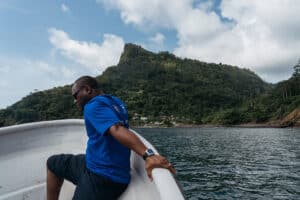
The UCMI team has just returned from Annobón, Equatorial Guinea, following several weeks of field work conducted in partnership with the Government of Equatorial Guinea. This marks an important step in our shared effort to better understand the local mosquito population and advance long-term strategies for malaria elimination.
The trip followed a defined work plan focused on several key research priorities that will help deepen our understanding of Anopheles coluzzi, the primary malaria vector in this region, and support the broader goals of our program. The work plan included:
Mosquito Collection and Environmental Mapping
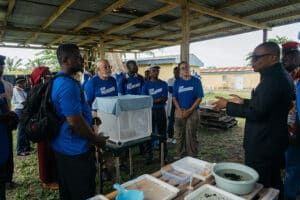
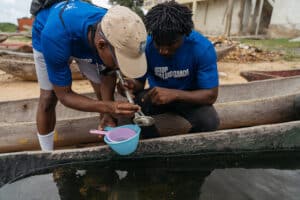
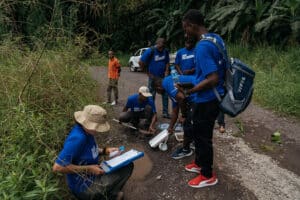
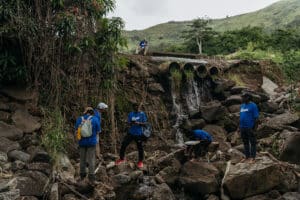
The team collected mosquito larvae from water bodies and adult mosquitoes across the island. Samples were systematically documented, including location, elevation, temperature, and salinity, to better understand where mosquitoes are present and the environments in which they are most likely to be found.
Establishing a Mosquito Colony
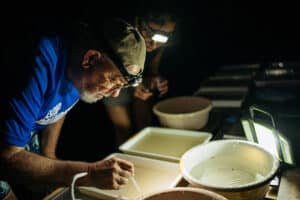
To support ongoing research, the team worked to establish an Annobón mosquito colony for the UC Davis insectary. Larvae collected in the field were raised to adulthood and moved through subsequent life stages under controlled conditions.
Genetic Analysis and Classification
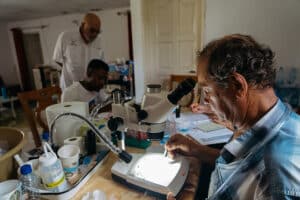
Samples were collected for genetic analysis, including karyotyping, to classify the mosquito population in Annobón. Examining chromosome structure allows researchers to better understand differences within populations that may not be visible otherwise.
Ecological Context and Non-Target Species
The team collected non-target species found in the same habitats as Anopheles coluzzii, including aquatic predators such as dragonfly larvae and other organisms collected from mosquito-positive sites. This work provides important ecological context and contributes to a more complete understanding of the local environment
Biting Behavior and Activity Patterns
Through human landing catch collections, the team gathered information on when mosquitoes are most actively seeking a blood meal. This data helps inform future mark-release-recapture studies.
Across all of this work, the team followed a structured collection and documentation plan. Samples were labeled, preserved, and prepared for additional analysis after returning from the field. Taken together, this effort represents an important step in building the knowledge needed to better understand mosquito populations in Annobón and to support the next phase of UCMI’s work.
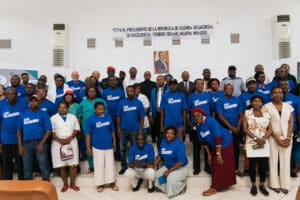
This work was conducted in close collaboration with the Ministry of Health, the National Malaria Control Program, the Bioko Island Malaria Elimination Project, and local community members in Annobón.
At its core, this work reflects a growing collaboration grounded in science, local partnership, and a long-term vision: eliminating malaria transmission and ultimately saving lives for generations to come.