University of California Malaria Initiative (UCMI) Secures $30 Million from Coefficient Giving to Advance Malaria Elimination in Equatorial Guinea
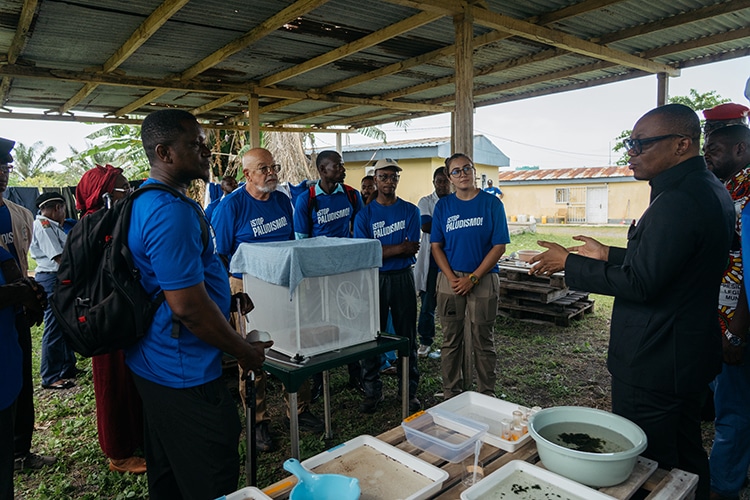
Coefficient Giving, a philanthropic funder and advisor committed to cost-effective, high-impact giving, has awarded $30 million to the University of California Malaria Initiative (UCMI) to advance its work in preventing the mosquito-driven spread of malaria. The new funding continues a partnership between Coefficient Giving and UCMI that began in 2019 and will support UCMI’s growing collaboration with the Government of Equatorial Guinea to implement UCMI’s gene drive technology in support of the country’s national malaria elimination goals.
“This award allows us to continue our mission, offering support to Equatorial Guinea in achieving their malaria elimination goal through responsible science, deep collaboration, and genuine community engagement,” said Dr. Gregory C. Lanzaro, Director of UCMI and Professor in the Department of Veterinary Pathology, Microbiology and Immunology at the University of California, Davis, Weill School of Veterinary Medicine. “Together, we can help build a future where malaria no longer threatens families and communities across the region.”
“Rising resistance to insecticides and drugs means the tools behind decades of progress against malaria are losing ground, and new approaches are urgently needed,” said Heather Youngs, Program Director of Scientific Research at Coefficient Giving. “Equatorial Guinea has shown real leadership in exploring innovative tools, and we’re proud to support UCMI as it helps the country work toward elimination carefully, transparently, and in deep partnership with its scientists and communities.”
Malaria remains one of the world’s most urgent public health challenges, claiming more than 600,000 lives every year — the vast majority of them children under the age of five. Despite decades of effort and significant global investment, rising insecticide and drug resistance continue to undermine progress, making the development of new tools critical.
UCMI is working with Equatorial Guinea at the invitation of its government, which has identified gene drive technology as a potential tool in its Vision 2030 malaria elimination strategy. The government of Equatorial Guinea has granted UCMI official approval to work in partnership with the Ministry of Health and MCD Global Health, with the Ministry providing oversight and final authorization of all activities. All work follows international best practices and WHO guidance, and UCMI is committed to supporting Equatorial Guinea in meeting international standards — including WHO certification for malaria elimination. The new funding will support the next phase of UCMI’s work in Equatorial Guinea, including ongoing community engagement, scientific testing, and capacity building in collaboration with Equatoguinean scientists, regulators, policymakers, and community representatives.
UC Davis is one of three U.S. institutions participating in UCMI, a not-for-profit global research collaboration dedicated to delivering a sustainable and scalable solution to one of the world’s most significant public health challenges — rooted in transparency, ethical rigor, and local ownership.
About the University of California Malaria Initiative (UCMI)
The University of California Malaria Initiative (UCMI) is a not-for-profit research collaboration that supports the responsible development and deployment of genetically modified mosquitoes and has decades of global leadership and technical expertise in malaria elimination efforts. Learn more: stopmalaria.org
About Coefficient Giving
Coefficient Giving is a philanthropic funder and advisor that works with donors who share its commitment to cost-effective, high-impact giving. Since 2014, it has directed more than $7 billion in grants across more than a dozen cause areas and has conducted in-depth research to identify the areas where philanthropic capital can have the greatest impact. Its founding and most significant partnership is with Good Ventures. Coefficient Giving also partners with other philanthropists to support their giving, providing research on cause areas and specific giving opportunities, strategic guidance on how to maximize impact, and operational support. For more information, visit coefficientgiving.org.